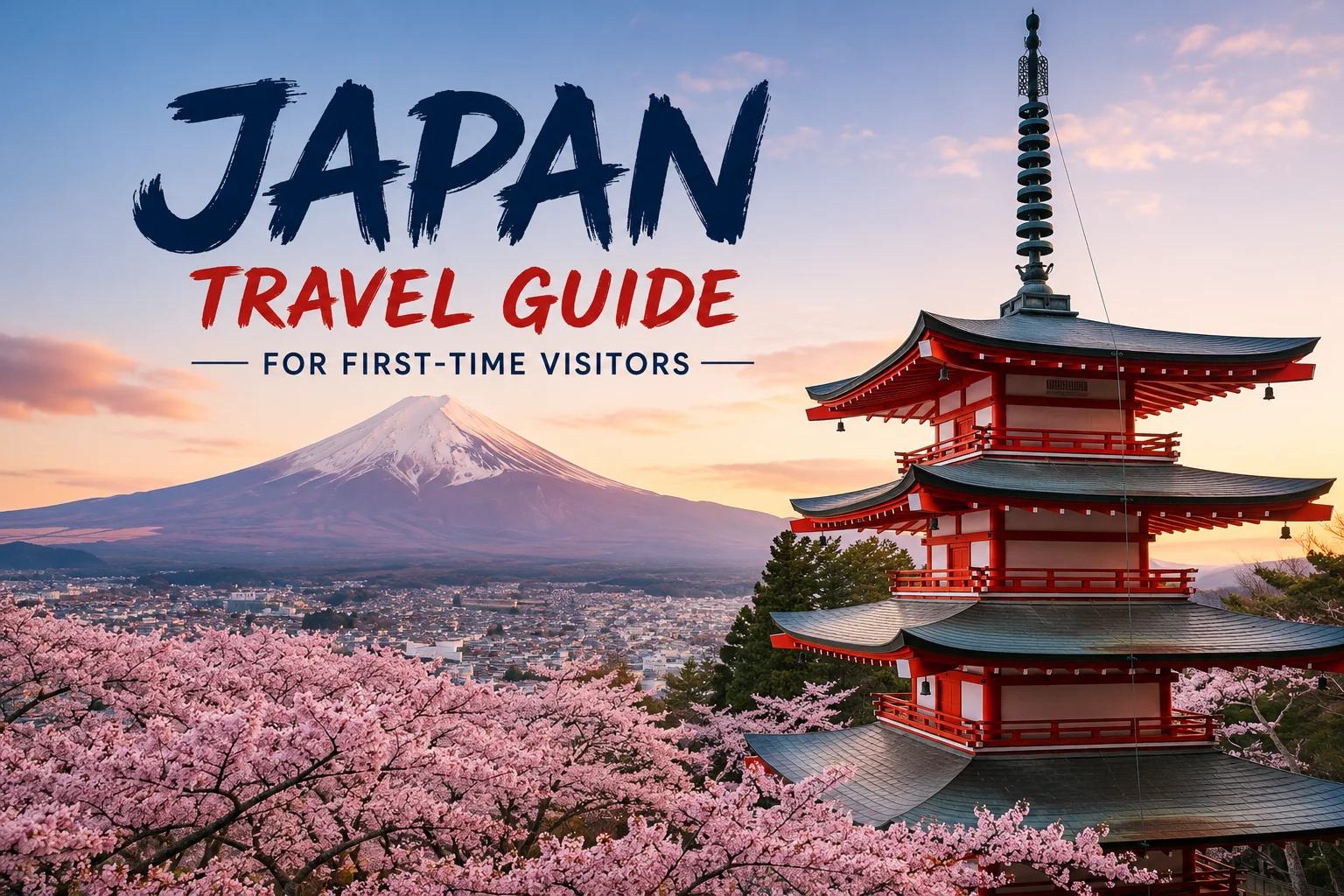
Japan offers an unusual combination of ancient traditions, modern cities, regional food, beautiful landscapes, and highly efficient transportation. For first-time visitors, this variety can make planning exciting but also slightly overwhelming. There are countless places to visit, foods to try, and experiences to consider, from busy urban centers to quiet countryside destinations.
A successful trip does not require visiting every famous destination. Instead, travelers can create a more enjoyable experience by understanding the country’s regions, choosing destinations that match their interests, and allowing enough time to experience each place without rushing.
This Japan travel guide introduces some of the key considerations for first-time visitors, including where to go, how to plan transportation, what to eat, how to approach Japanese culture, and how to build a comfortable itinerary.
Understanding Japan as a Travel Destination
Japan is an archipelago with considerable geographic and cultural diversity. Tokyo, Kyoto, Osaka, Hokkaido, Okinawa, and other regions can offer very different experiences.
Major cities offer different experiences
Tokyo is known for its enormous scale, shopping, dining, entertainment, and mixture of traditional and contemporary neighborhoods.
Kyoto provides a different atmosphere, with temples, gardens, historic districts, and traditional cultural experiences.
Osaka is particularly well known for its food culture, energetic neighborhoods, and approachable urban atmosphere.
Further north, Hokkaido offers a combination of spacious landscapes, seasonal activities, fresh food, and cities such as Sapporo.
Because these destinations have distinct characteristics, travelers should avoid assuming that one city represents the entire country.
Japan is highly seasonal
The seasons can significantly influence a trip.
Spring is associated with cherry blossoms and comfortable sightseeing conditions in many areas. Summer brings warmer weather and opportunities for festivals and outdoor activities. Autumn offers colorful foliage and cooler temperatures, while winter provides snow experiences, winter sports, seasonal cuisine, and atmospheric landscapes.
Choosing the season based on the experiences you want can be more useful than simply selecting dates based on availability.
Choosing Where to Go in Japan
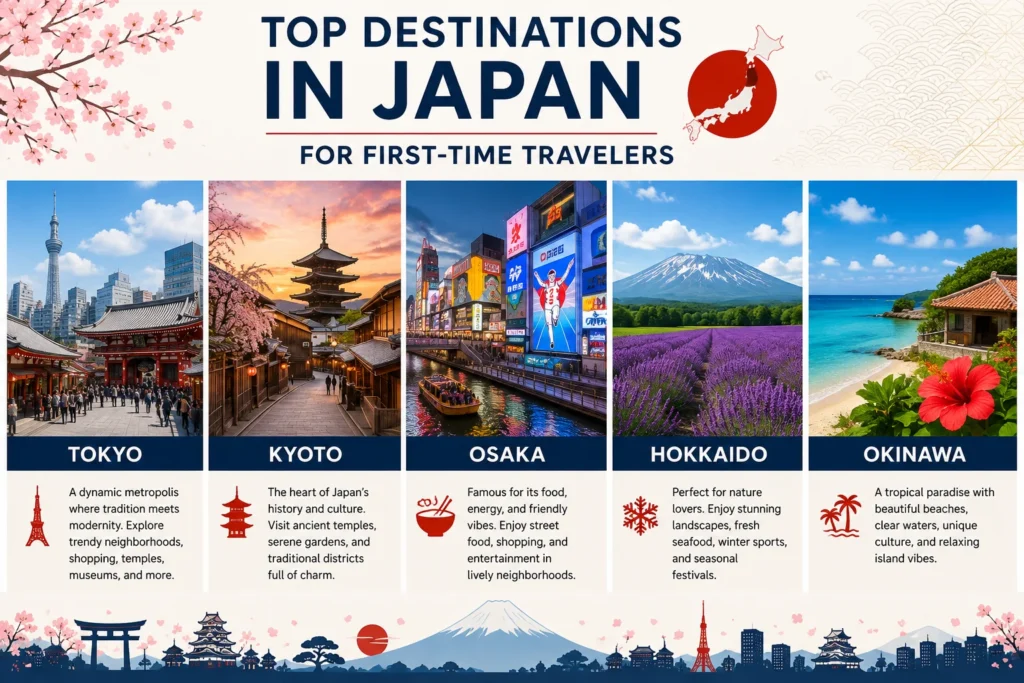
First-time visitors often face the challenge of deciding which destinations to include.
Tokyo for a dynamic introduction
Tokyo can be an excellent starting point for travelers who want to experience Japan’s modern side.
The city combines major shopping districts, restaurants, museums, entertainment, historic temples, parks, and neighborhoods with distinct personalities.
Because of its scale, travelers should avoid trying to explore the entire city in a single day. Grouping attractions by neighborhood can make the experience considerably easier.
Kyoto for history and culture
Kyoto is often associated with traditional Japanese architecture, temples, gardens, shrines, and historic neighborhoods.
Travelers interested in Japanese history and culture may want to dedicate several days to exploring the city rather than treating it as a quick day trip.
Early mornings can also provide a more relaxed atmosphere at some popular attractions.
Osaka for food and entertainment
Osaka offers a lively urban experience with a strong food culture.
Visitors can explore local specialties, shopping streets, entertainment districts, and cultural attractions.
Its location also makes it convenient for travelers who want to combine Osaka with destinations in the Kansai region.
Hokkaido for nature and seasonal experiences
Hokkaido provides a different perspective on Japan. The region is known for its landscapes, agricultural products, seafood, winter scenery, and outdoor activities.
Sapporo can serve as a convenient urban base for exploring the region while also offering its own restaurants, shopping, cultural attractions, and seasonal experiences.
Travelers who want a more refined stay in the city may also consider a luxury sapporo hotel when selecting accommodation.
Okinawa for a different side of Japan
Okinawa offers a tropical environment that differs considerably from the main islands.
Visitors can explore beaches, marine activities, local cuisine, and a distinct cultural heritage.
It can be particularly appealing to travelers who want to combine Japanese culture with a more relaxed island atmosphere.
Creating a Japan Itinerary
The ideal itinerary depends on the length of the trip and the number of regions you want to visit.
Short trips
For a short first visit, focusing on one region can make the journey more comfortable.
Trying to visit Tokyo, Kyoto, Osaka, Hokkaido, and Okinawa within a few days would create significant travel time and leave little opportunity to enjoy each destination.
A shorter itinerary is often better when it focuses on fewer places.
Longer trips
A longer vacation provides more flexibility.
Travelers can combine major cities with smaller destinations or add regional excursions without making every day feel rushed.
Longer trips can also allow time for slower experiences such as visiting local neighborhoods, relaxing in an onsen, exploring regional food, or spending time in nature.
Avoid changing hotels too frequently
Moving between accommodations can consume more time than expected.
Packing, checking out, traveling to a station or airport, and checking into another property can take a significant portion of the day.
Whenever possible, staying several nights in one location can create a more comfortable travel rhythm.
Getting Around Japan
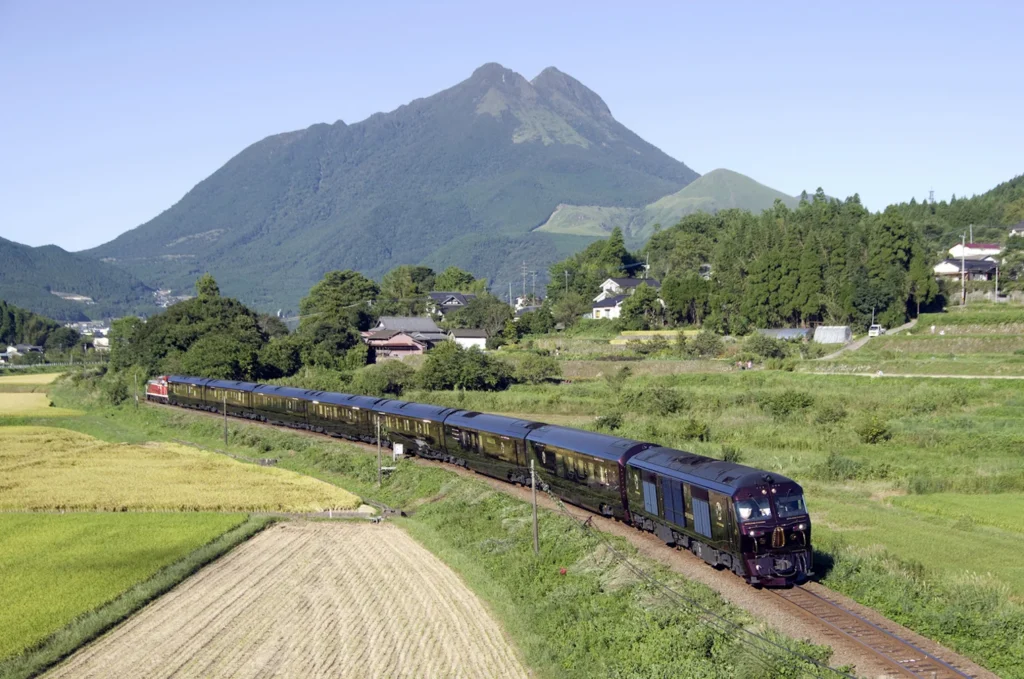
Transportation is one of Japan’s major strengths, but first-time visitors may initially find the system complicated.
Trains are essential for many itineraries
Rail travel can connect major cities and regional destinations efficiently.
For travelers moving between major destinations, trains can often be a practical alternative to domestic flights.
However, the best option depends on the route, duration, luggage, and overall itinerary.
Local transportation matters too
Once travelers arrive in a destination, they may use subways, local trains, buses, trams, or taxis.
Learning the basic transportation options for each city before arrival can reduce confusion.
Do not underestimate walking
Walking is often one of the best ways to experience Japanese cities.
Travelers can discover small restaurants, stores, architecture, residential streets, and public spaces that may not appear on a standard sightseeing list.
Combining public transportation with walking can create an efficient but immersive travel experience.
Japanese Food to Try
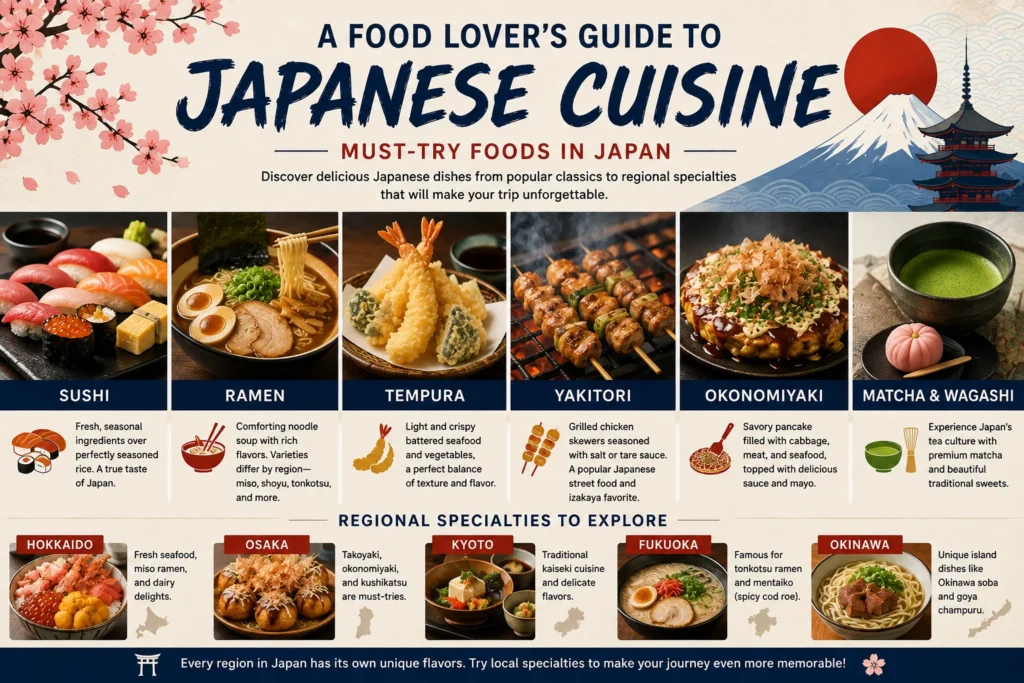
Food is one of the most rewarding parts of traveling through Japan because regional specialties vary considerably.
Sushi and seafood
Sushi is internationally recognized, but experiencing seafood in Japan can provide a broader perspective on the cuisine.
Different regions are known for different seafood, and seasonal availability can influence what appears on restaurant menus.
Ramen
Ramen styles vary across Japan.
Travelers may encounter different broths, noodles, toppings, and regional approaches depending on where they visit.
Trying ramen in more than one city can be an easy way to notice these regional differences.
Regional specialties
Japan’s food culture extends far beyond sushi and ramen.
Travelers can explore dishes associated with particular cities or regions, including Osaka’s street food, Kyoto’s traditional cuisine, Hokkaido seafood, and Okinawan specialties.
Trying local dishes can make each destination feel more distinct.
Understanding Japanese Culture and Etiquette
Visitors do not need to know every Japanese custom before arriving, but understanding a few basic principles can make interactions smoother.
Respect shared spaces
Japan generally places importance on consideration for others in public spaces.
Keeping conversations relatively quiet on trains, standing in appropriate areas, and avoiding unnecessary disruption can help maintain a comfortable environment.
Follow local instructions
Many attractions, restaurants, temples, and public facilities have their own rules.
Rather than assuming that familiar behavior is acceptable everywhere, travelers should pay attention to signs and instructions.
Shoes may need to be removed
Some traditional accommodations, restaurants, temples, and other spaces may require visitors to remove their shoes.
Travelers can make the process easier by wearing footwear that is convenient to take on and off.
Choosing Accommodation
Accommodation can influence the overall comfort of a trip, particularly when travelers are moving between several destinations.
Prioritize location
A convenient location can reduce travel time and make it easier to return to the accommodation after a long day.
For major cities, proximity to public transportation can be particularly useful.
Consider the purpose of the trip
Different travelers have different accommodation priorities.
A solo traveler may prioritize convenience and location, while couples may place more emphasis on atmosphere and dining. Families may need larger rooms and additional facilities.
Business travelers may prioritize workspace and transportation access.
Think beyond the room
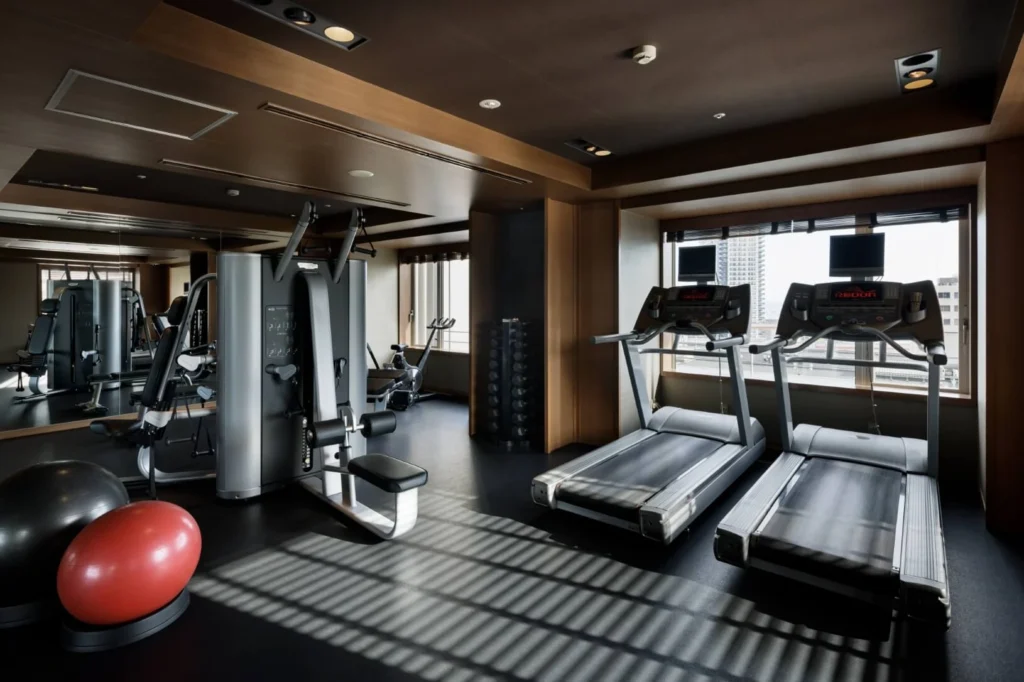
The overall accommodation experience can include dining, lounges, wellness facilities, fitness areas, guest services, and other amenities.
For longer stays, these details can have a meaningful impact on comfort.
Traveling During Different Seasons
The season affects more than just the scenery.
Spring travel
Spring can be particularly popular because of cherry blossom season.
However, peak blossom periods can also mean increased demand for accommodation and transportation in certain destinations.
Travelers who want to experience spring scenery should consider flexibility with dates.
Summer travel
Summer can be warm and humid in many parts of Japan.
Travelers should plan regular breaks, stay hydrated, and consider scheduling outdoor sightseeing during more comfortable parts of the day.
Summer festivals and regional events can also add something special to an itinerary.
Autumn travel
Autumn provides cooler weather and colorful landscapes.
It can be an excellent season for travelers interested in gardens, mountain scenery, photography, and outdoor exploration.
Winter travel
Winter can be particularly rewarding for travelers interested in snow.
Hokkaido and other northern regions offer winter activities, while mountain areas throughout Japan can provide opportunities for skiing and snowboarding.
Winter also creates opportunities to experience hot springs while surrounded by cold-weather scenery.
Planning Around Travel Pace
One of the most important lessons for first-time visitors is that more destinations do not necessarily create a better trip.
Leave room for rest
Long flights, jet lag, walking, and constant sightseeing can quickly become tiring.
Scheduling occasional slower periods can help travelers maintain their energy.
A relaxed afternoon at a café or hotel can sometimes be more enjoyable than adding another attraction.
Mix major attractions with local experiences
Famous landmarks are worth experiencing, but they do not need to dominate every day.
Travelers can combine major attractions with neighborhood walks, local restaurants, small shops, and quieter cultural experiences.
This creates more variety throughout the trip.
Preparing Before Departure
Good preparation can reduce stress after arriving in Japan.
Research transportation routes
Knowing the general route from the airport to your accommodation is useful, particularly after a long international flight.
Travelers should also understand how they will move between major destinations.
Check seasonal weather
Weather conditions can vary considerably between regions.
A winter trip to Hokkaido requires very different preparation from a summer trip to Okinawa.
Packing should therefore be based on the specific destinations and season rather than Japan as a whole.
Keep important information accessible
Travelers should keep accommodation details, transportation information, reservation confirmations, and important travel documents accessible during the journey.
Digital copies can be useful, while having essential information available offline can provide additional convenience.
Making the Most of Your First Japan Trip
A first visit to Japan can feel overwhelming because there are so many possibilities.
The best approach is to identify what genuinely interests you and build the itinerary around those priorities.
Food lovers might focus on regional cuisine. Culture enthusiasts may spend more time in historic cities. Outdoor travelers can prioritize mountains, parks, and seasonal activities. Shoppers may prefer major urban centers.
There is no single correct way to experience Japan.
Building a Balanced Travel Experience
A well-planned Japan trip should combine convenience with discovery.
Transportation can help travelers move efficiently, while walking allows them to experience destinations more closely. Major attractions can provide iconic memories, while smaller local experiences can add character to the journey.
Accommodation, dining, culture, nature, and rest should also have space within the itinerary.
Travelers who approach planning this way can create a journey that feels personal rather than simply following a checklist of famous places.
Conclusion
Japan offers an extraordinary range of travel experiences, from the energy of Tokyo and Osaka to the cultural depth of Kyoto, the seasonal landscapes of Hokkaido, and the tropical character of Okinawa.
For first-time visitors, the key is not trying to experience everything at once. Choose destinations based on your interests, consider the season, plan transportation in advance, and leave enough time to enjoy each place.
Food, culture, nature, shopping, and accommodation can all become meaningful parts of the journey when they are balanced with a comfortable pace.
With thoughtful preparation and a willingness to explore beyond the most famous attractions, a first trip to Japan can become more than a checklist of destinations. It can be an opportunity to experience the different regional identities, traditions, and everyday details that make traveling through Japan so rewarding.
Frequently Asked Questions
How many days are needed for a first trip to Japan?
There is no fixed number, but a longer stay allows travelers to experience multiple regions without rushing. Shorter trips can still be enjoyable when focused on one or two destinations.
What are the best places to visit in Japan for first-time travelers?
Tokyo, Kyoto, Osaka, and Hokkaido are popular starting points because they offer very different experiences. The best combination depends on individual interests and available time.
Is Japan easy to travel around?
Japan has an extensive transportation network, including trains, subways, buses, and domestic flights. First-time visitors may need some preparation, but transportation becomes easier once the main routes are understood.
What is the best season to visit Japan?
Every season has advantages. Spring is popular for blossoms, summer for festivals and outdoor activities, autumn for foliage, and winter for snow experiences and seasonal activities.
Should I visit multiple cities during my first trip?
Multiple cities can work well for longer trips. For shorter vacations, focusing on fewer destinations can provide a more relaxed and enjoyable experience.