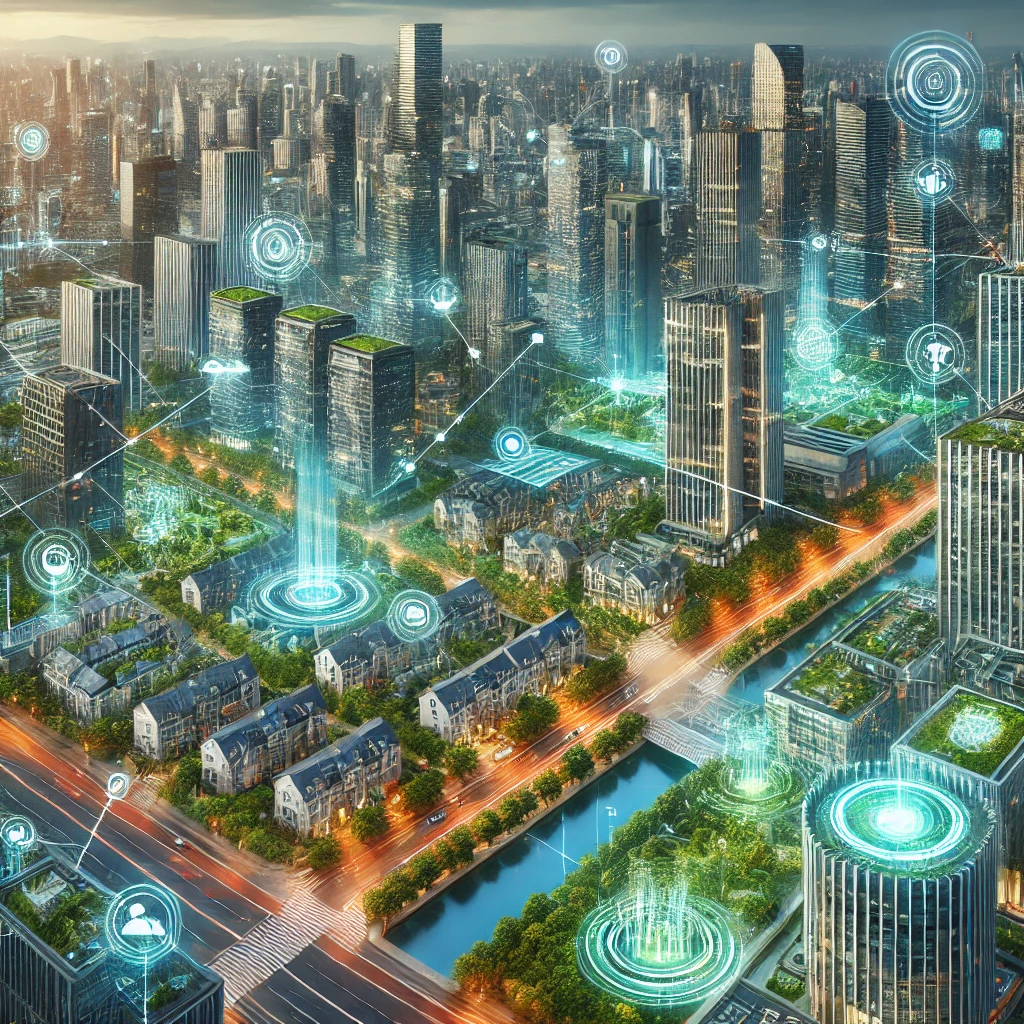
In the rapidly evolving landscape of urban development, smart cities are at the forefront, blending cutting-edge technology with urban infrastructure to create more efficient, sustainable, and livable environments. As cities worldwide embrace digital transformation, real estate plays a crucial role in integrating these innovations, setting the stage for a new era of urban living.
What Are Smart Cities?
Smart cities use technology to improve the lives of their residents, make urban services more efficient, and promote sustainability. This includes implementing smart traffic management systems, energy-efficient buildings, digital healthcare, and advanced waste management. The aim is to create interconnected urban environments where technology optimizes daily living.
The Role of Real Estate in Smart Cities
Real estate is a key component in the development of smart cities. Designers of buildings and infrastructure must integrate various smart technologies. This includes smart home systems, which allow residents to control lighting, heating, and security remotely, and buildings with sensors that monitor energy usage, air quality, and even occupancy levels.
Developers are increasingly focusing on creating properties that are not only technologically advanced but also environmentally sustainable. Green buildings that utilize renewable energy sources, water recycling systems, and energy-efficient materials are becoming the standard in smart city planning.
Also read, How Property Rentals Can Generate Revenue for Businesses.
Examples of Urban Technology Integration
Several cities worldwide are leading the way in integrating urban technology with real estate. For example, in Singapore, the Punggol Digital District is designed to be a hub for smart technology, featuring intelligent traffic systems and buildings that adapt to the needs of their occupants in real time.
Amsterdam has implemented a smart grid that connects homes and businesses, allowing for better energy distribution and management. Similarly, Barcelona has developed a network of sensors throughout the city to monitor and optimize everything from traffic flow to waste collection.
The Benefits for Residents and Investors
Integrating real estate with urban technology means a higher quality of life for residents. Smart cities offer greater convenience, improved safety, and a healthier environment. For instance, intelligent buildings can automatically adjust temperature and lighting based on the time of day or the presence of people, leading to significant energy savings and enhanced comfort.
For investors, smart cities represent a lucrative opportunity. Due to their higher standard of living, properties within smart cities are likely to see increased demand. Focusing on sustainability and efficiency can also lead to long-term cost savings and increased property value.
Challenges and Future Prospects
Despite the many benefits, integrating urban technology with real estate is challenging. High initial costs, data privacy concerns, and the need for widespread technology adoption present obstacles. However, as technology advances and the demand for intelligent cities grows, these challenges will likely be addressed.
The future of smart cities and real estate integration is promising. As more towns worldwide embark on the journey to becoming smart cities, real estate’s role will only become more significant. By embracing innovation and sustainability, smart cities are poised to redefine urban living for future generations.